An AI sock puppet might be Cardiff data centre’s only supporter
Against more than 3,000 objections – one lone voice fights back


It’s not easy to find people who like the idea of a data centre replacing Cardiff East Park and Ride.
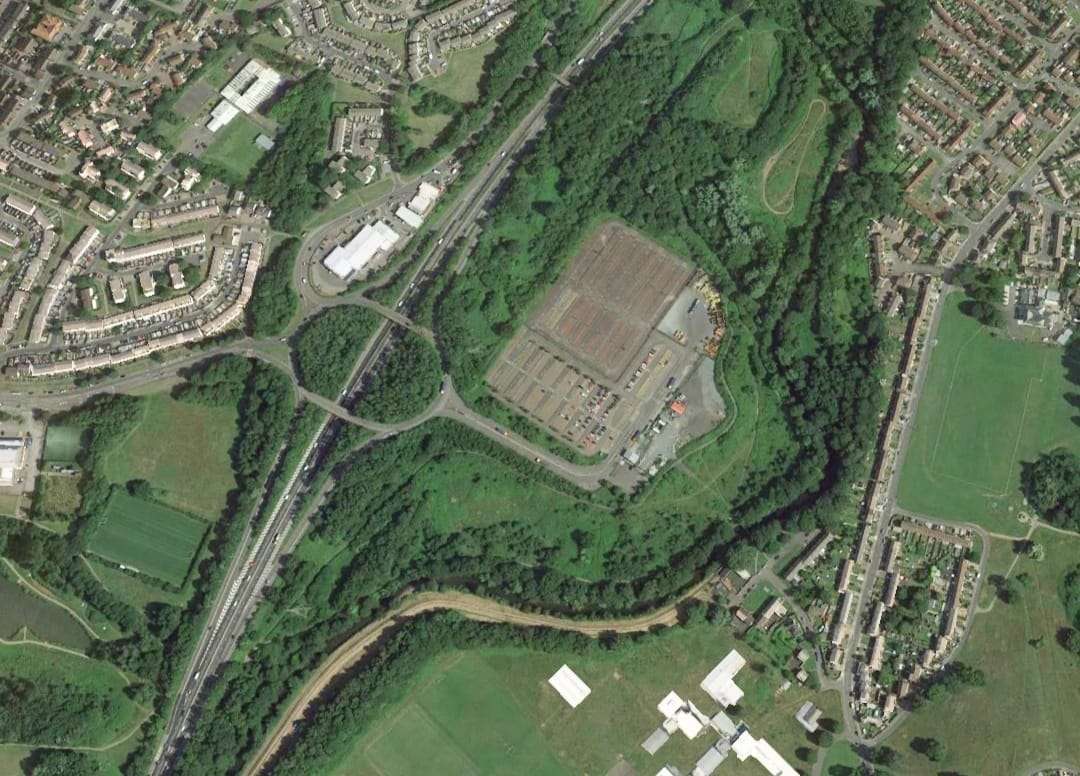
The park and ride in Llanrumney, offering 1,000 spaces for staff and patients travelling to Heath hospital, is under threat because Cardiff Council wants to sell the land to a developer called Curtis Hall, which plans to build a massive data centre there.
The scheme has prompted more than 3,000 objections, which according to campaigners is the most in Welsh planning history. The council listed only two comments in support, and one of those seems to have been misclassified.
Northamptonshire-based Curtis Hall is planning to meet the site’s vast electricity demands by connecting it to the national grid. But this could take five years or even longer, some politicians fear, due to strained capacity. Until then the data centre would be powered using gas turbines, which has led to major concerns over emissions in an area densely populated with homes, schools and care homes.
That’s not to mention the fears of 24-hour noise and light pollution, the loss of the park and ride, flood risks, and heavy water use to cool the equipment.
But in the face of all that vocal opposition, one supportive voice began posting last week in a Facebook group for Llanrumney news. The name on the account was Tomos Owen, and he shared a document from the developer arguing the facility would be positive for the community.
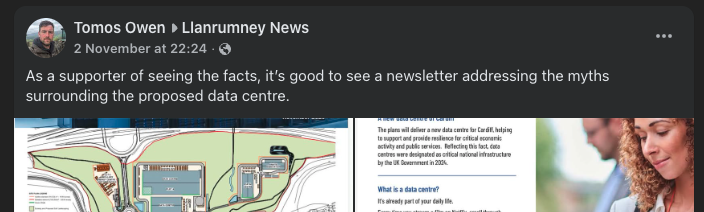
“It’s good to see a newsletter addressing the myths surrounding the proposed data centre,” wrote Tomos, who went on to post further favourable comments. “Read up on why south Wales is an AI growth zone, understand the importance of Wales' digital economy.”
This failed to impress other members of the group, who quickly became suspicious of the account’s profile picture. It appeared to show a bearded man, standing beside a tractor with Welsh-ish hills in the background. But where in Wales exactly? If you recognise it, you’re doing better than us. Which part of a tractor is that? The wheels are at questionable angles.

Members of the group ran the image through an AI-generation detector. It was flagged as fake.
Although Tomos claimed to be a “digital creator” from Caerphilly, the account had been created days earlier and most of his Facebook friends seemed to be bots. When we messaged him some questions about his identity and his interest in the scheme, he failed to answer.
In a community where suspicions of dark machinations were already gathering pace (more on this later), Tomos' contributions did little to ease them.
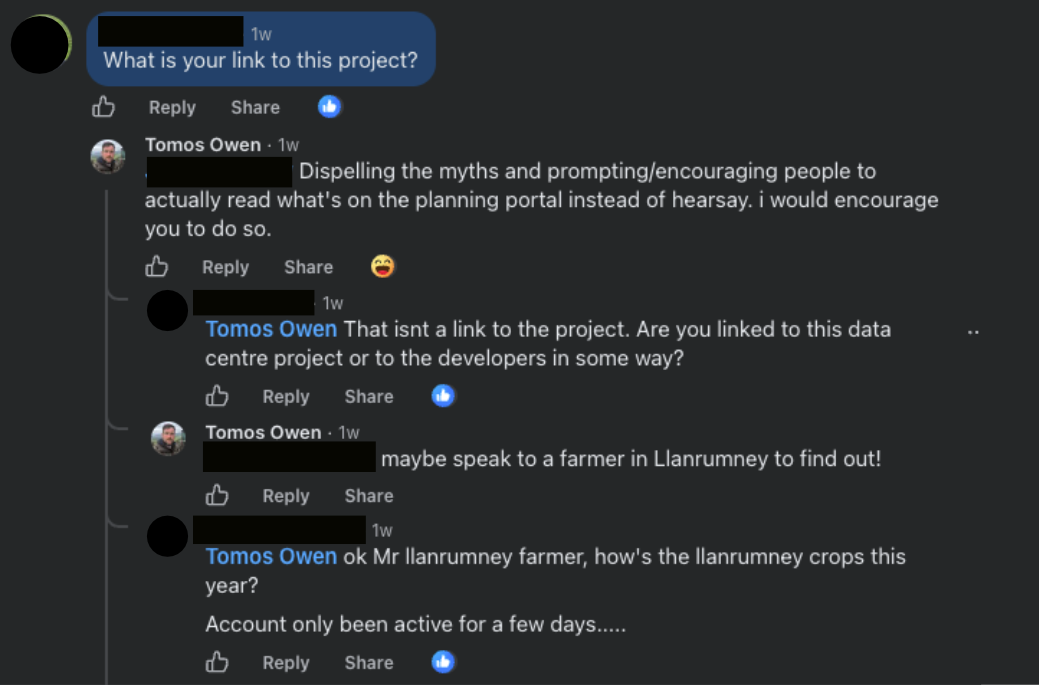
We emailed Curtis Hall’s PR reps about the Facebook account but received no response for two days. When we gave them a call, they said Tomos had “nothing to do with us”.
It’s quite something that the posts of an apparent AI sock puppet are almost the only show of public support for a planning application as high profile as this. Yet, against that stark backdrop, it has been recommended for approval by the council’s planning officers.
‘Rich people who aren’t from here think they can do whatever they want’
Tomorrow the planning committee will meet to discuss the application, though they cannot formally grant planning permission because the Welsh Government has placed the case on hold while it considers the concerns.
It’s not hard to see why people are upset. A couple of hundred metres from the development site, just over the Rhymney river, is a new-build estate called Maple Fields with around 100 homes. Its residents had only just moved in when they learned of the application. Many told me they wouldn’t have bought their homes had they known in advance.

“Oh, that bleeding thing,” says Karen Silver, approaching on a mobility scooter having spotted me walking through the estate with my notepad. The retired Welsh Water worker, 65, moved into her house as recently as June without any idea of the plan.
“I wanted peace and quiet, which I’ve got – it’s so lovely and quiet and peaceful – and now they are going to build the bleeding noisy thing.”
There is a serene quality to Maple Fields. Residents say there is something of old-fashioned suburbia about the way children play together on the streets after school. Those who enjoy river walks in the nearby woodland are greeted by kingfishers and herons.
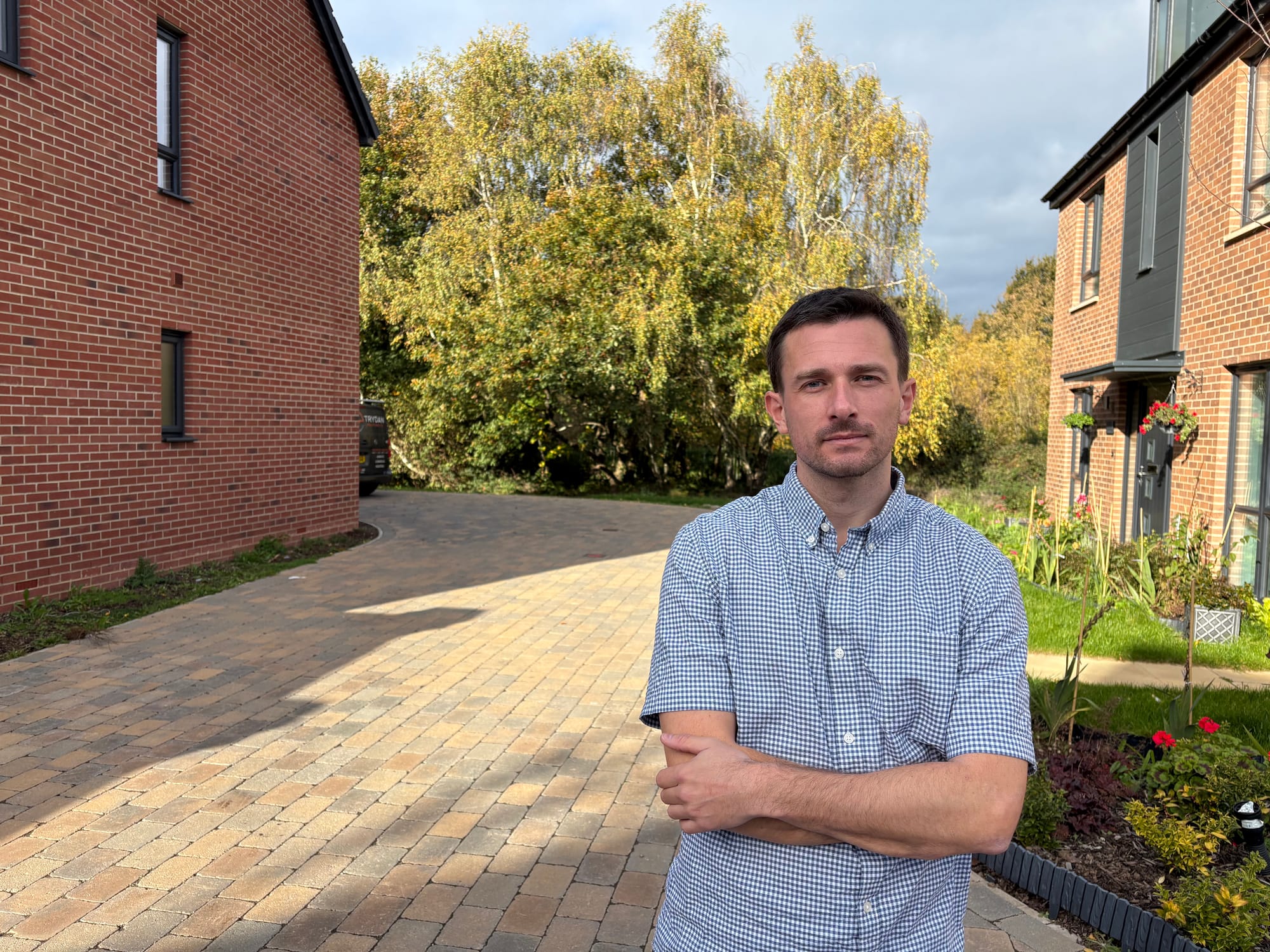
Nick Richards, a 38-year-old freelance filmmaker who moved in last year, has been marshalling the community’s fightback since learning about the application three months ago, from leafleting every house on the estate to making campaign videos that have been widely shared on social media.
When we sit down with Nick in his kitchen, he opens his laptop to reveal a complex system of folders within folders, filled with case studies he’s been following from parts of the US where data centres have been linked to poor health outcomes. He speaks about the issue with a mix of passion and humour, poking fun at big tech’s recent attempts to rebrand AI data centres as “compute campuses”.